
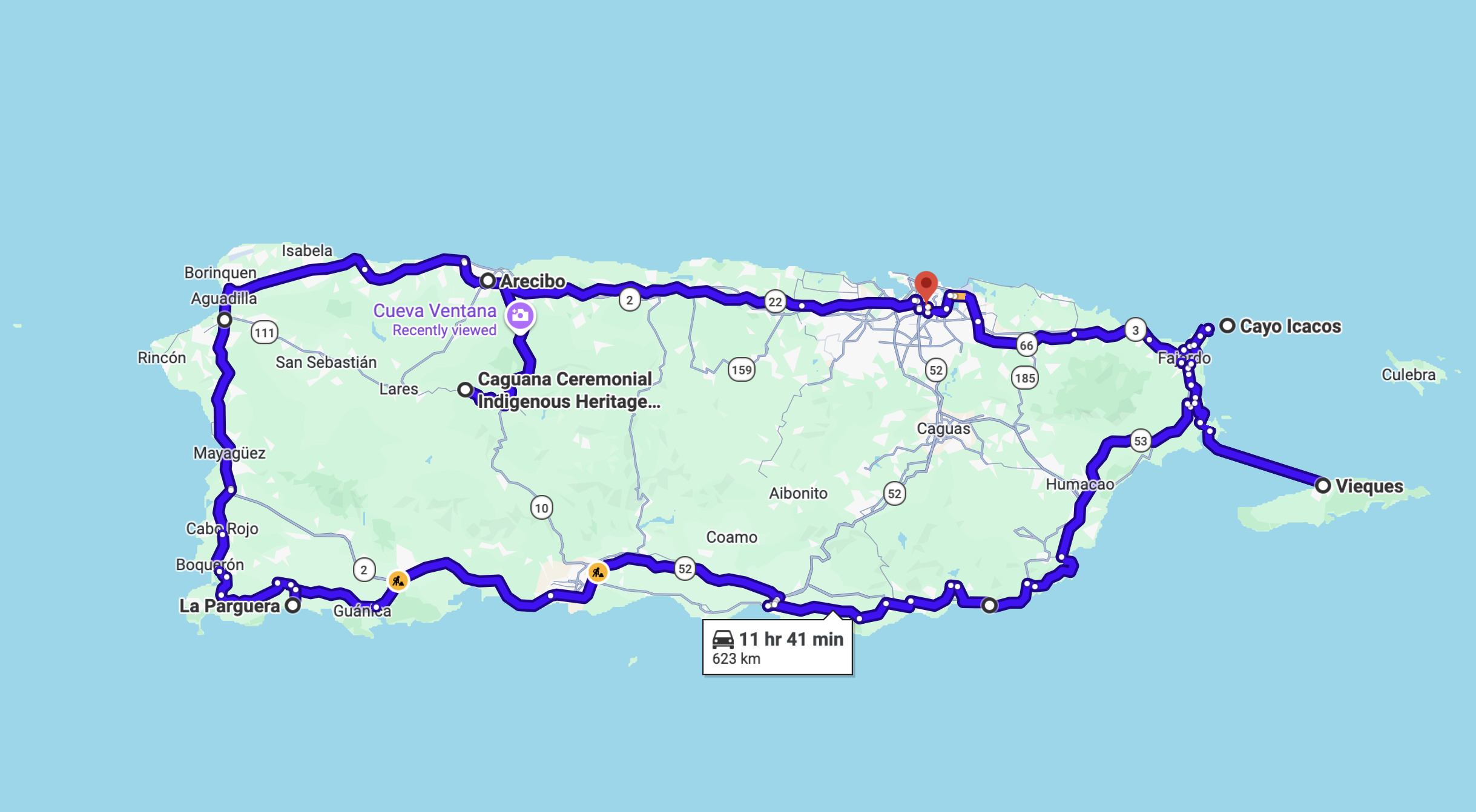
Puerto Rico — Scorecard
Mathis’s verdict
★★★★
Best experience: Batay River Caving
Best food: Carnitas
Best beach: Cayo Icacos
Best wildlife moment: Listening to the coquí frogs and encountering horses daily.
Best surprise: Icacos turning into a massive Puerto Rican fiesta
Wouldn't repeat: Cabo Rojo Salt Flats
Wish we'd known: Always wear sunscreen no matter what, and make sure that you have shoes that are comfortable, or else the long hikes will be very painful.
Would we return? YES
Lucas’s verdict
★★★★
Best experience: El Yunque Rainforest
Best food: None, I didn't really like it
Best beach: Cayo Icacos
Best wildlife moment: Seeing the iguanas
Best surprise: Being able to swim in the Bioluminescent Bay
Wouldn't repeat: Cabo Rojo Salt Flats
Wish we'd known: A lot of the food uses plantains prepared in different ways—mofongo, bifongo/trifongo, tostones, amarillos, pasteles—and beans, so be aware if, like me, you’re not a big fan of them.
Would we return? YES
Puerto Rico — Good to know 🇵🇷
Puerto Rico is a Caribbean archipelago and an unincorporated U.S. territory. While Puerto Ricans are U.S. citizens and the island operates under its own constitution and local government, residents cannot vote in U.S. presidential elections, and the territory lacks voting representation in Congress. Both Spanish and English are official languages, though Spanish is by far the primary language spoken in daily life.
The archipelago consists of the main island of Puerto Rico alongside smaller islands and cays, including Vieques, Culebra, and Mona. Beyond its political ties, the island boasts a distinct culture, vibrant history, and unique local wildlife such as the native coquí frog, whose tiny "koKEE" call fills the night air long before you ever spot one.
17 days in 2 minutes
I could review all 17 days, every stop, every beach, every meal... But nobody has time for that. So here's the highlight reel: a few places and experiences worth talking about, what was great, what wasn't, what we'd do again, and what sounded better when we planned it. Not the whole trip. Just the good stuff... and a few fails.
LUQUILLO + FAJARDO
- 01
Luquillo Beach + Kiosks
Great family beach, relaxed local vibe, and a ridiculous number of food options right next to the sand. Basically, beach + food = hard to complain. Except... we didn't actually eat at the kiosks. There were tons of choices, but nothing really convinced us that day. Maybe we were being overly cautious, but we still had 17 days of traveling ahead of us, and nobody wanted to get sick on the first day. It just felt TOO local for us to handle. One thing we've learned while traveling: people will always tell you, “You HAVE to try this!”
But if something doesn't feel right at that moment, just pass. There will always be another great meal waiting to be found somewhere else on the island. Would we go back? Definitely. Would we finally try the kiosks? Probably.
- 02
El Yunque
A huge storm welcomed us and stopped as soon as we parked, which is typical of tropical weather. Despite arriving early, we already had trouble finding parking. To start exploring El Yunque, we followed the wonderful and easy pathway to Yokahú Tower, with beautiful views and the sound of coquís following us through the forest. We also stopped at Baño Grande, a man-made pool surrounded by rainforest, but you couldn’t swim in it.
After more driving, roadwork, construction and increasingly large crowds, we eventually looked at each other and basically decided: Yeah... we're good. So we skipped the waterfalls and rivers and moved on. Still, the forest itself is beautiful and absolutely worth seeing. Wait... “the only tropical rainforest in the U.S.”? While exploring the island or planning a visit, you'll see El Yunque described as the only tropical rainforest in the U.S.
This immediately made us think: “Wait. What about Hawaii? We've walked through tropical rainforests there.” Turns out that both Hawaii and Puerto Rico have tropical rainforests, but the key difference is who manages them. Hawaii’s tropical rainforests are managed as National Parks, state parks or reserves, while El Yunque is specifically a U.S. National Forest.
Is this an interesting fact to know? Yeah. Is it also extremely confusing? Definitely. Would we return to El Yunque? Yes, but earlier, with better weather, and with more time for the rivers and waterfalls.
- 03
Cayo Icacos
We took an early water taxi to Icacos, which was already part of the fun. When we arrived, umbrellas and chairs were waiting for us. Turquoise water, tons of fish, coral reefs, iguanas everywhere... pretty much exactly what you imagine when someone says Caribbean island. We snorkeled and walked around the cay, finding old structures and even some wild fruit. Our expectations were simple: A quiet deserted island. A few boats. Snorkeling. Peace. That lasted about one hour. We had somehow forgotten one small detail:
It was July 4th, everyone was off work, and Puerto Ricans LOVE to party! Boats started arriving. Then more boats. Then music. Then louder music from both boats and the beach. Our peaceful deserted island had turned into what felt like Puerto Rico's main party spot. And honestly? It was awesome. The one thing we didn't love was seeing trash and some boats dropping anchors directly onto the reef. In a place this beautiful, the impact is hard not to notice. Expectation: deserted island Reality: giant beach fiesta Would we do it again? Absolutely.
- 04
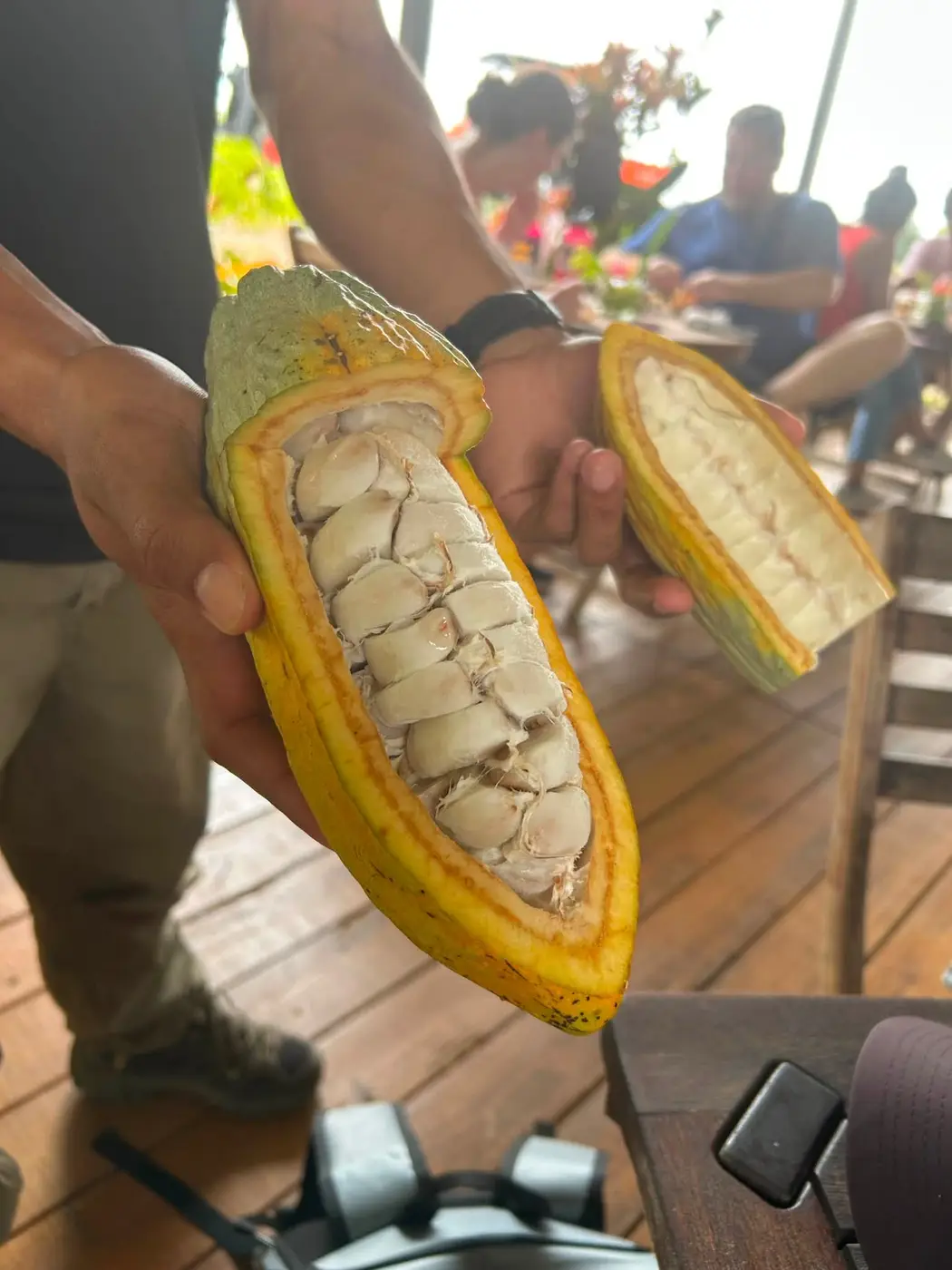
Hacienda Chocolate
The adventure starts before you even reach the hacienda because you take an ATV from the parking area. Good start. Then we met one of the most interesting guides of the whole trip, who was part botanist, part farmer, and clearly someone who could happily talk about plants for the next six hours. Then came the chocolate tasting. Different chocolates, different flavors, trying to figure out what we could taste... Basically one hour of happiness disguised as education. We bought chocolate bars afterward. They did not last very long and were completely gone by the second day.
Biggest regret: Not buying more chocolate. Would we do it again? Yes. No discussion.
More from our Puerto Rico photo journal → - 05
Old San Juan
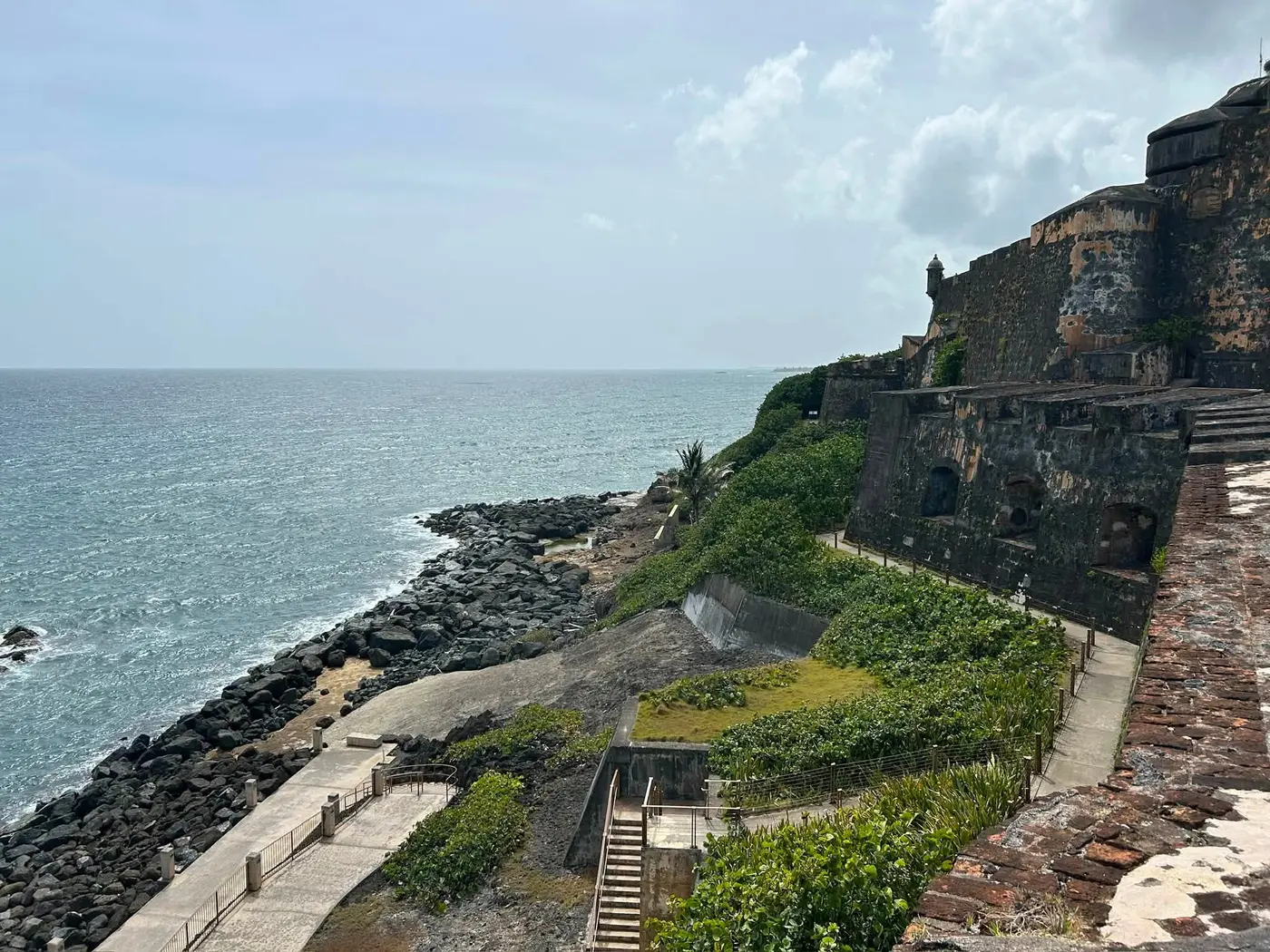
Colorful buildings, cobblestone streets, ocean views and history everywhere. El Morro was the highlight for us, and surprisingly, the movie made for visitors to describe the history was one of the best we've seen at a tourist attraction. Yes. We just complimented an educational movie. Unfortunately, we had to leave before it finished. Also, when people tell you to bring water to Old San Juan... Believe them. We thought we had plenty. Two hours later: completely empty bottles.
The water dispenser at El Morro was filling them one drop at a time, and we were left searching for other sources. During the trip, we also experienced two days without running water, which gave us a very real reminder that water infrastructure can still be a challenge in parts of Puerto Rico.
Food stop: El Jibarito
A casual place serving traditional Puerto Rican food like mofongo, stews and other local dishes. Exactly the kind of place we wanted. Old San Juan verdict: Definitely worth the time. Travel lesson: Bring more water than you think you need. You can never have too much!
More from our Puerto Rico photo journal →
LA PARGUERA + CABO ROJO
- 01
La Parguera — Renting Our Own Boat
La Parguera has a small fishing-village feel and a really relaxed atmosphere. The best decision here was renting our own boat. Being able to explore on our own completely changed the experience, with beautiful cays, clear water full of fish, soft white sand, snorkeling and some incredible drone views. No established tour schedule. No “everyone back on the boat in 20 minutes.” Just us deciding where to go next. Would we do it again? 100%.
- 02
Swimming in the Bioluminescent Bay
This was pure magic. Before swimming, you're told not to use sunscreen or mosquito repellent because they can harm the organisms responsible for the glow. Then you get in. The second the water started glowing around us, all maturity disappeared. We were splashing everywhere like five-year-olds trying to make the water light up more. And yes, it worked. Photos don't really capture it. Video doesn't really capture it either. It's one of those things you just have to see. Important tip: Check the moon phase. The darker the night, the easier it is to see the glow.
Would we do it again? Without hesitation.
- 03
Cabo Rojo Salt Flats
This one didn't exactly go according to plan. The Interpretive Center was interesting and actually became the best part of the stop. The salt flats themselves? Inactive when we visited. There was also quite a bit of trash around. Then we headed toward the lighthouse... Closed. So there we were with a few other confused tourists, basically looking at each other like: Now what? Conditions could obviously be completely different another day or season, but for us, on that day, it wasn't really worth the detour.
Would we repeat it? Maybe, but only after checking conditions and doing more research first.
- 04
Guánica
This didn't look like the Puerto Rico we'd been seeing. Dry. Rugged. Full of cliffs. Great viewpoints. Even the road there was beautiful. Unfortunately, we didn't have enough time for a real hike, so we only explored a little before continuing toward Arecibo. This is one of the rare places where leaving made us think: We should have planned more time here. Next trip: Longer stop. Real hike. No rushing. We would definitely come back.
ARECIBO + UTUADO
- 01
Cueva Ventana
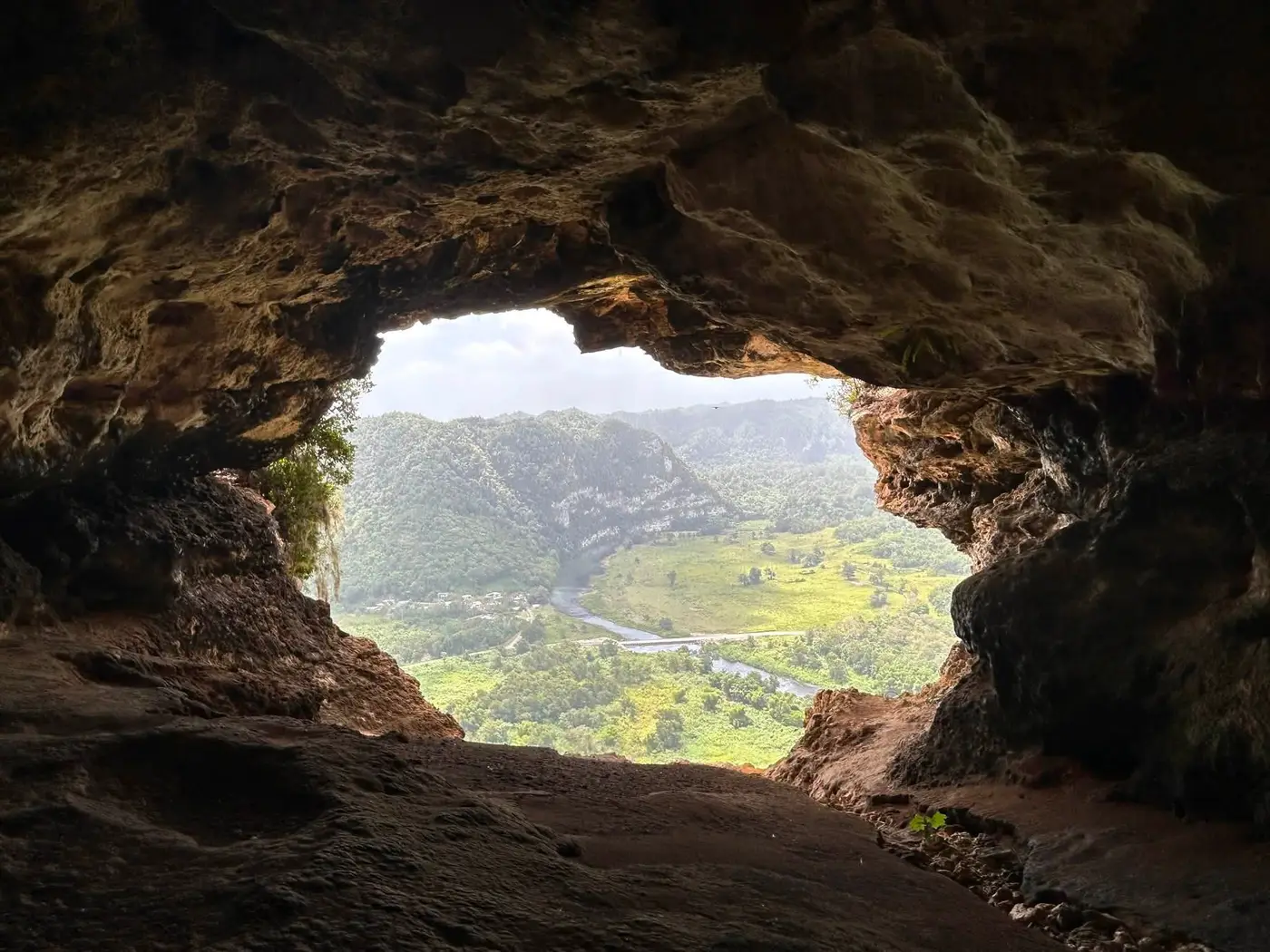
Caves, bats, geology, local wildlife and history with a huge opening overlooking the valley at the end. The final view is fantastic. Our only problem was that the experience felt a little too controlled. Big group. Stay on the path. Stay together. Don't go there. Don't get too close. We completely understand the safety reasons, but after a while it felt less like exploring a cave and more like being on a school field trip with strict teachers. A smaller group would probably make a huge difference. Worth seeing? Yes.
What would we change? Smaller group and a bit more freedom if possible.
More from our Puerto Rico photo journal → - 02
Batay River Caving — Tanamá River
This wasn't originally the plan. We wanted to go tubing or kayaking on the Tanamá River, but a lot of tours were expensive or required kids to be 12+. Lucas was 11. Then we found Batay River Caving and stumbled on one of the best experiences of the entire trip. Only eight people, with a local guide who clearly loved the area and wanted us to understand it. We hiked through the forest, kayaked through an underground river cave and Cueva del Arco, crossed a 150-foot suspension bridge, climbed over boulders and stood under spring-fed waterfalls.
Some parts were challenging, which made it better. A storm had made the water cloudy, so our guide decided the natural-pool jumps weren't safe. Were we disappointed? Not at all. That's exactly the decision you want a guide to make. He made mud face masks for us, tolerated my great attempts at skipping stones, and helped Lucas when the hike became difficult. Then he announced that Lucas could handle his own kayak. We weren't completely convinced, but Lucas was. Turns out Lucas was right. Even after finishing the tour, the experience didn’t stop.
Near their office was a tiny place popular with the locals to grab coffee and takeout food. That morning we'd been warned that the Sunday food would probably be gone when we returned. When we got back... They had saved some for us. And it was delicious. We arrived as tourists, but left already missing the people we'd just met. Would we do it again? Absolutely. One of the trip favorites? Definitely.
- 03
Cueva del Indio
Finding the free entrance was almost harder than finding the cave. There were plenty of very visible signs directing us toward private parking with entrance fees. The free entrance? Not quite so enthusiastic about advertising itself. We drove up and down the road several times before finally spotting a tiny entrance and about five parking spaces on the opposite side. During all this, we kept driving past an absolutely massive statue behind a closed entrance. Later we discovered it was Birth of the New World, a 361-foot Columbus statue. Which raises an interesting question:
How do you repeatedly drive past a 361-foot statue and not know what you're looking at? Apparently, pretty easily. Once we finally found the trail, though, it was worth it. A gorgeous little beach with incredibly clear water, hermit crabs, sea urchins and fish, followed by a short coastal hike to beautiful rock formations and Cueva del Indio.
Tip: Look carefully for the free-access entrance. It is VERY easy to drive straight past.
Parking search: Disappointing Everything after parking: Excellent
VIEQUES
- 01
The Ferry
We expected chaos. Instead... it was surprisingly easy. Parking was simple, the terminal was easy to reach on foot or shuttle, boarding went smoothly, and the crossing took about an hour. The one thing that somewhat bothered us was the heat. It is so hot in Puerto Rico, especially when out in the sun at the ferry port. All for just a few dollars per person plus luggage. We'd booked online because we expected crowds. What we didn't understand was that only some tickets are released online. So when we saw all the greyed-out ferry times, we assumed: Sold out. Game over.
We arrived very early after driving from San Juan and planned to kill time watching the 2026 FIFA World Cup using the Wi-Fi. Instead, someone told us we could switch from our 6 PM ferry to the 4 PM departure that was about to leave. Two extra hours in Vieques. We'll take that. After seeing how easy and inexpensive the ferry was, we honestly didn't understand paying hundreds of dollars for the nearby flights unless saving time is really important.
Tip: If your preferred ferry looks sold out online, don't automatically assume it actually is. And if you arrive early, ask about an earlier departure.
Sometimes asking one question gets you two extra hours of fun.
- 02
UTV — Best Decision
Before the trip, we had to choose: Jeep, golf cart, or UTV? We chose the UTV. Best choice. Powerful enough not to hold up traffic, much more fun than a golf cart, and open enough that you feel like you're exploring the island rather than just driving through it. It was a great family memory. There are roads where rental contracts don't allow UTVs, so make sure to check the rules. There were some issues with the UTV, though. For example, at night, when another car approaches with headlights, visibility can suddenly go from: Fine, just a little dark. to
I SEE NOTHING BUT HEADLIGHTS. So we slowed down and were extra careful. Still... Jeep? Maybe. Golf cart? No thanks. UTV again? Absolutely.
- 03
Mosquito Bay — Clear Kayak Bio Bay
Getting there was already an experience. A big group packed into a bus bouncing down a seriously rough road. Then we arrived and had to leave our shoes behind to protect the clear kayaks. Next step? Walk through warm, smelly swamp mud almost up to our knees. Luxury Caribbean vacation... with a free mud spa. We'd already done a bioluminescent bay near Cape Canaveral, Florida, in regular opaque kayaks, so this time we specifically wanted to try the clear-kayak version. It sounded like an upgrade. In reality? Cool idea, but the clear bottom didn't add as much as we had hoped.
Our 7 PM tour was also a little too early. The sky wasn't completely dark yet, which makes a big difference with bioluminescence. And there was another problem: we had already swum in the magnificent glowing water at La Parguera earlier in the trip. Providing an experience as good as that or better would be difficult. Mosquito Bay was beautiful and seeing the water light up around the kayak was still incredible, but it just didn't give us the same WOW moment we had at La Parguera. Would we do Mosquito Bay again? Yes. Clear kayak again? Not necessary.
Would we choose a later tour? Definitely.
Our advice: Book the darkest time possible, check the moon phase...
…and maybe don't wear your favorite shoes unless you want them covered in mud.
- 04
Snorkeling + Beaches
Vieques really is a paradise for swimming and snorkeling. But not every beach looked like the photos.
During our stay, several were covered with huge amounts of sargassum. And it's more complicated than just “annoying seaweed.” Offshore, sargassum is actually important habitat for marine life. The problem starts when huge quantities wash ashore and decompose, affecting beaches, wildlife and sometimes even air quality.
Luckily, Vieques gives you options. We especially loved Punta Arenas, with its old bunkers, Laguna Kiani, and on the south side, Esperanza and Caracas Beach.
Before choosing your beach
Sargassum conditions can change quickly with currents, wind and weather, so the beach that looks perfect online may look very different when you arrive. Check the CARICOOS Sargassum Tracker for Puerto Rico and the Caribbean before heading out. NOAA also publishes a Daily Sargassum Inundation Risk map using satellite data.
Official trackers:
CARICOOS — Puerto Rico & Caribbean Sargassum Tracker ↗
NOAA — Daily Sargassum Inundation Risk ↗
Teen verdict
Don't judge Vieques by one beach. If sargassum takes over one side of the island... Go find another.
- 05
Wild Horses... Sort Of
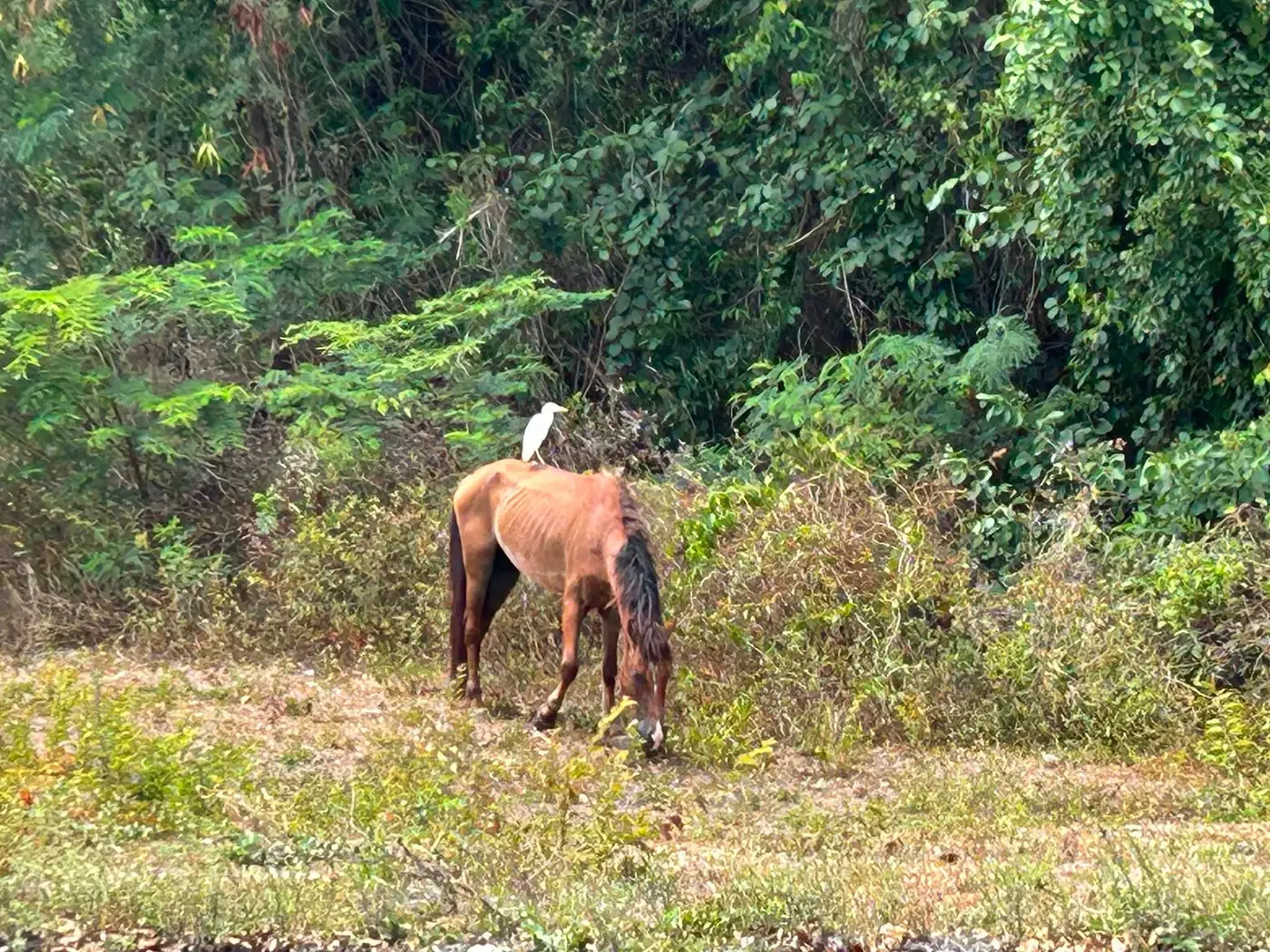
One of our favorite things about Vieques was discovering all the different animals roaming about. Iguanas, chickens, pigs, cats, dogs, and especially the famous “wild horses”. There were wild animals basically everywhere. Something interesting we learned about the famous “wild horses” is that many aren't technically wild and have owners. They're just allowed to roam. Which also means driving around Vieques occasionally involves turning a corner and finding... a horse on the road. So, if you spot some, slow down.
The idea of letting horses roam freely wherever they wanted was completely new to us, but we loved it. Somehow, it felt very Vieques.
More from our Puerto Rico photo journal →
Vieques — Behind the postcard
The more we learned about Vieques, the more we realized that the beautiful beaches are only part of its story. For decades, large areas of the island were used by the U.S. Navy for military training and bombing exercises. After years of protests, military operations ended in 2003. Much of that former military land is now part of the Vieques National Wildlife Refuge, but the cleanup isn't finished. Some areas remain closed because of contamination and unexploded munitions.
There have also been long-standing concerns about unusually high cancer rates and other illnesses among Vieques residents. Studies have raised questions about possible links with former military activity, although that connection remains debated and hasn't been clearly established.
Then add hurricanes, especially Maria, and some of the damaged and abandoned buildings around the island start to make more sense. Learning the history didn't make Vieques less beautiful, but it made us look at it differently. Sometimes traveling isn't just about finding the best beach. It's about understanding what happened there before you arrived. The postcard is beautiful, but the story behind it matters too.
Summary
Biggest surprise: Icacos turning into a giant July 4th beach party.
Experience we'd repeat: Batay River Caving.
Most magical moment: Swimming in the bioluminescent water at La Parguera.
Best accidental discovery: The people and food after Batay.
Best decision: Renting our own boat and choosing the UTV.
Best educational experience that didn't feel educational: The chocolate tasting. Obviously.
Didn't go as planned: Cabo Rojo Salt Flats and the lighthouse.
Sounded cooler when booking it: Clear kayak at Mosquito Bay.
Place that deserved more time: Guánica.
Things to know: Check the weather, moon phase, beach conditions and opening hours, because nature and Puerto Rico attractions do not read our itinerary.
And the main lesson?
A good trip isn't the one where everything goes according to plan.
The best trips are those that are full of surprises and leave you with the best experiences.